Success is teamwork – in the saddle and behind it
Isabell Werth talks about success as a collective achievement, well-established routines in everyday show life, modern horse transport, and her journey from lawyer to entrepreneur in the saddle.
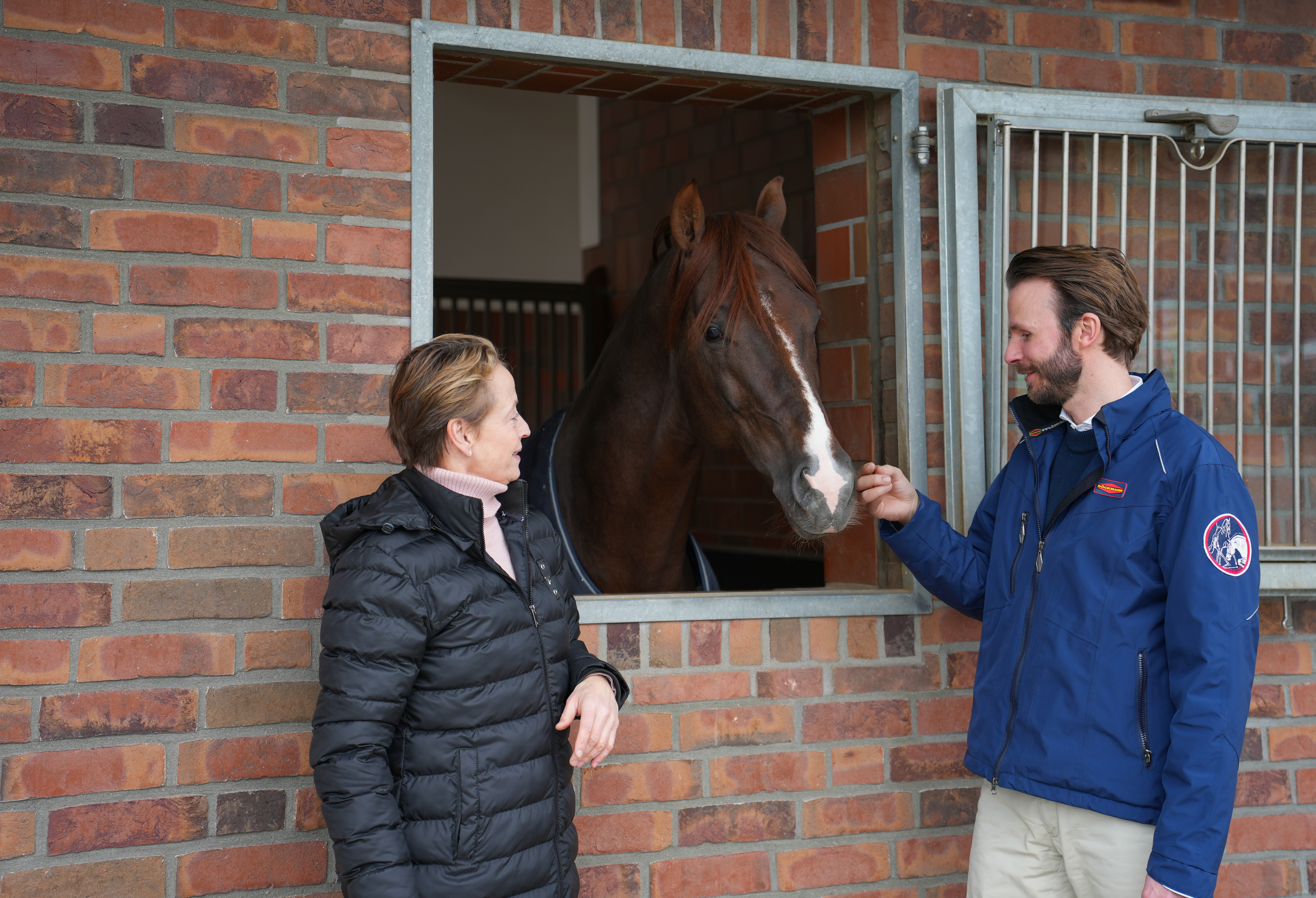
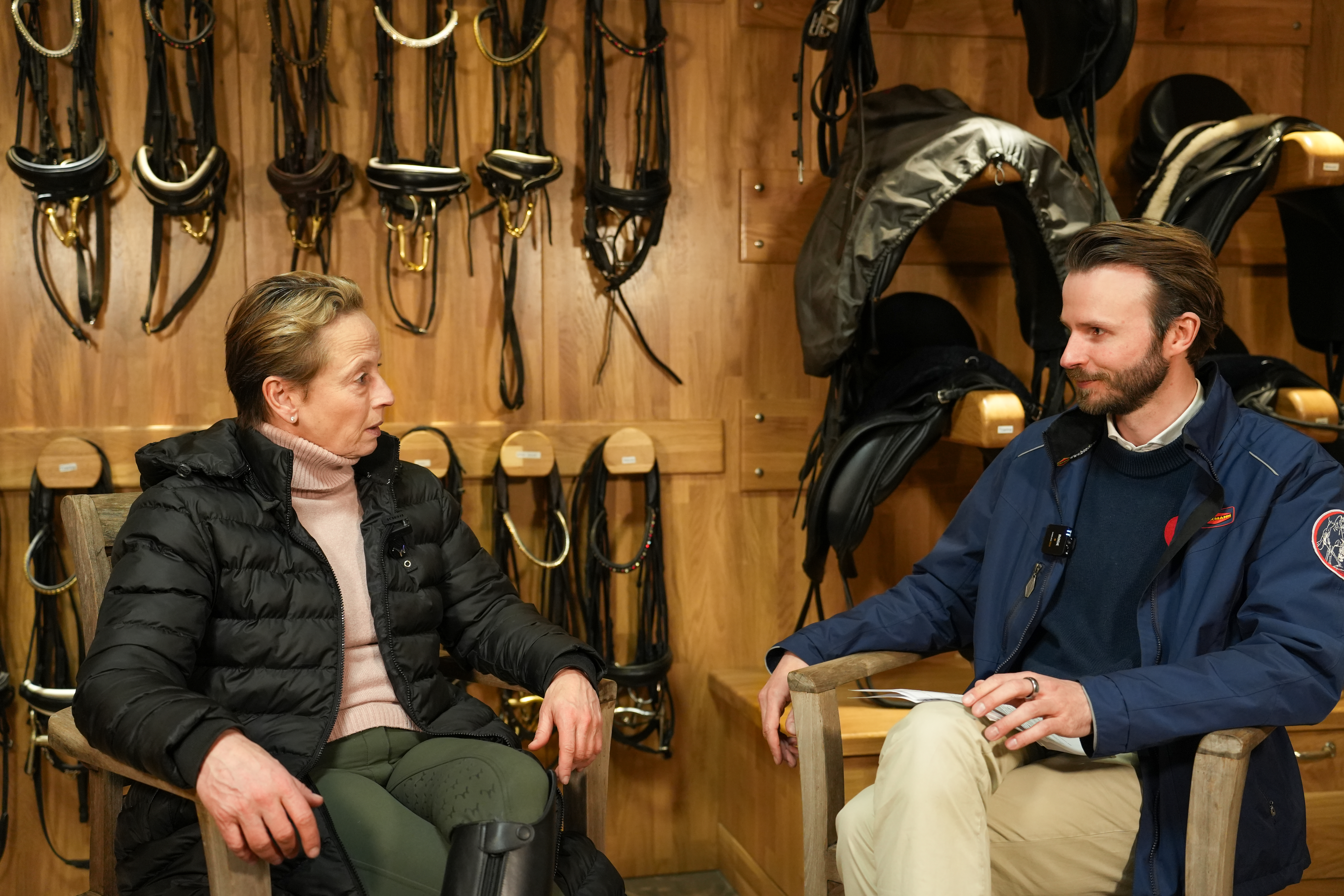
Justus Böckmann in conversation with Isabell Werth
You are the most successful rider in the history of the Olympic Games, have won numerous World and European Championships, and are considered one of the best dressage riders of all time. How important is the team and the equipment behind the horse-and-rider combination to this success?
It's part of the whole. It is impossible without a functioning team that worries about how to make things work twenty-four hours a day, seven days a week – just like we do – and doesn't drop the pitchfork at six o'clock when duty calls. It is vital that people think ahead, respond sensitively to reactions, recognize moods, and communicate them to me. That is just as important as the entire equipment around us – ranging from the snaffle bridle to the double bridle and the saddle, right through to transport from A to B with the vehicle.
What are things you no longer have to worry about in such a well-coordinated team?
When we go to a show and my groom Steffi is with us, the whole surrounding routine basically runs completely independently of me: departure, arrival, stabling. Questions like "Which horse goes where, what is best for whom?" She is one hundred percent focused and works with extreme care. Always ready to step in, whether morning, noon, evening, or during the night. That is incredibly important. It requires so much idealism and passion – you can't pay for that.
If we think about the journey to an important championship: Does a successful journey contribute to a successful outcome of the show?
Yes, and above all, that you travel in your own team. I remember, a long time ago, we were loaded onto shared transport, so to speak, and driven to championships or training camps. That is long gone. Today, the grooms have their own little oasis in the truck. And, of course, very importantly: the horses – that they stand as they are used to, that they have their own truck. We know whether they prefer to travel facing forwards, backwards, or sideways – that everything is simply there without having to be rearranged from scratch.
Do you have routines behind the scenes: A tack locker that is always packed?
We'd better not go into the tack room now to look at the chaos (laughs). But of course, we have our basic equipment in the tack locker. Other than that, the saddle, snaffle, or double bridle are always the same for each respective horse.
So not "for best" and "for home"?
No. There is no special Sunday-best set and training clothes. The equipment is broken in and customized. You can't just change that at will.
How many weekends a year are you on the road with the horses?
Feels like every other weekend. Overall, you could say I'm away between twenty and twenty-five weekends. If I have a Sunday at home, that's luxury. Then I ride a few horses very relaxed in the morning, and the afternoon is sacred – because that's when you can really gather your thoughts in peace. Though most of the time, some office work still catches up with you.
At home in Lastrup, it was always the case that the experienced horses started neighing when the truck pulled up or the trailer was hitched. Is that the same with you?
Yes, the horses react. If the tack locker is wheeled past one of them and they aren't coming along, there is trouble. That is simply in the horses. They are performance-oriented and look forward to the show. Of course, there are critics who don't want to believe that. But it is true. We have selected horses – especially those who have this ambition and drive, who want to present themselves and bring the joy of movement. That is a lot of fun.
Does your groom have preferences for the journey with the horses?
On long distances and night drives, when only one or two horses are traveling, they stand wide, just like in a box. We have had very good experiences with this: the horses relax a lot that way. Some get quiet music, and there is hay and water during long transports. On the whole, the horses are now so experienced at traveling that everything runs very smoothly.

How did you get your first Böckmann vehicle?
When the horse trucks came onto the market, it was a real milestone. That is how I got my first Böckmann. And one thing led to another.
When do you rely on the Performance, when on the Compact, and when on the large truck?
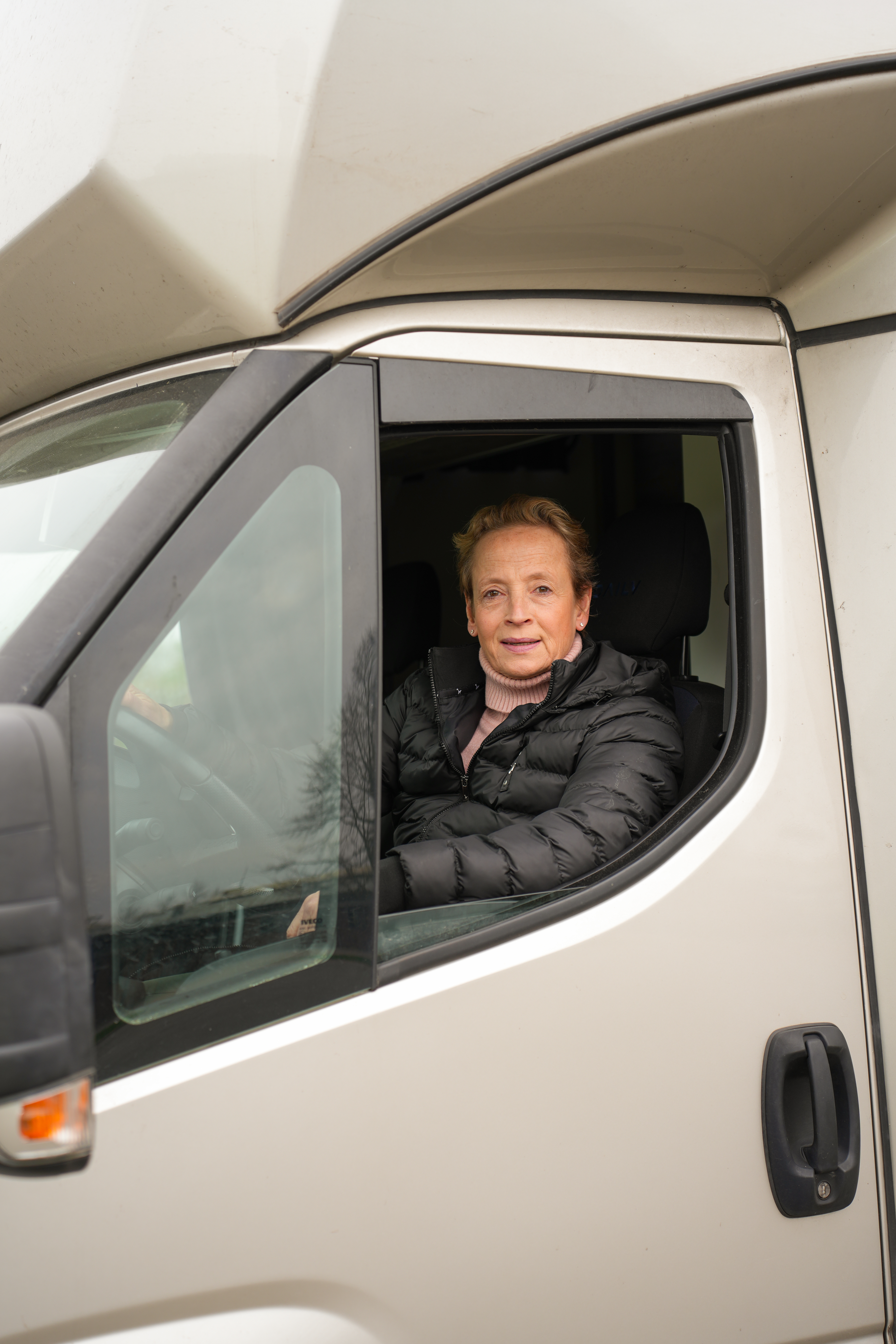
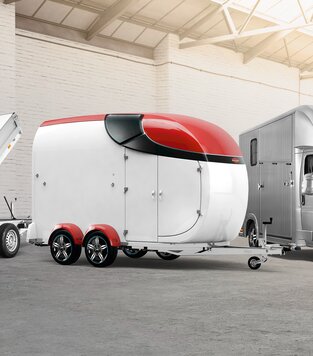
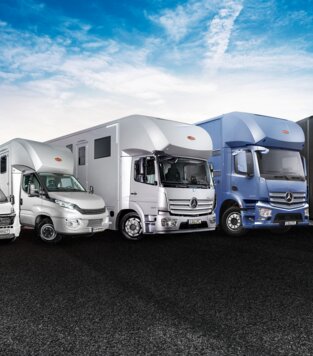
For short distances and smaller shows, the Compact is a wonderful fit. The Performance is great for everything else – with sleeping accommodation, a small living area, and plenty of space in the back. We never pack them in tight, so we can accommodate two horses very comfortably.
In dressage, there are outstanding horse-and-rider combinations – a rider with a top horse. Your career now spans more than three decades with many exceptional horses like Gigolo, Satchmo, Weihegold, Bella Rose. One cannot attribute that to mere luck; some would call it skill. What do you do better than others, what sets you apart? The intuition to respond to horses? A certain strength of nerve? Enthusiasm for the emotion? What is the Isabell Werth factor?
I believe it is a combination of all these factors. First and foremost, it is what I love doing most and what I do best: working with horses, riding, and training. I simply have a huge amount of fun doing it, and that is why it is so timeless. Unlike perhaps in other sports, with us, it is always new. A new horse, a new challenge, a new vision, a different kind of thrill. I believe a big part of my success is that I was willing and learned to adapt to the horses – not applying a single template, but developing alongside them. And when things were not so easy to solve, I looked into them very intensely and was never too proud to seek help from others, to take advice, and to observe how others do it and what others do better. I think all of these factors have contributed to the fact that I am still sitting here today.
Our transport solutions have evolved alongside sport and breeding: larger, more comfortable, different tack rooms, more safety. Yet our philosophy remains: "By practitioners, for practitioners" – what has not been tested at our own stable does not go into production. Has your training philosophy evolved as well?
Breeding has undergone a magnificent development. Today, we have a completely different potential and talent in the horses. Their attitude has become even more professional and willing to perform, because it is easier for horses across the board to meet the highest demands than it was thirty or forty years ago. Of course, there were exceptional horses back then too, but today we have many more of them. What was learned was repeatedly passed on to the next generation of horses. This is an ongoing process, and it is exactly the same with your vehicles: we are still driving on four wheels – you cannot reinvent that. But the size, the partitions, the chassis, removable troughs, the design of the tack room or the living area – today you also have completely different possibilities, for example, to reduce weight. All of these factors play just as much of a role for you as they do for us in the question of how we can deliver even more performance and make things even easier for the horses.
To stay with that example: when you have new materials, they often require new processing methods. Has riding become more refined due to the higher-quality horses, and have the standards risen?
Yes, clearly. Firstly, the overall conditions surrounding the horse have improved immensely. Stabling and management conditions have become extremely better. Unfortunately, this is something we have not yet managed to communicate to the wider public. There is still criticism that things are worse today than they were thirty years ago. That is definitely not the case.
And this goes right across horsemanship, housing conditions, reflection, and the overall care around the horse. Today, we have all kinds of technical requirements and medical possibilities: the treadmill, the aquatrainer, large horse walkers, racetracks, hill tracks... In my time with Dr. Schulten-Baumer, there was still a worry about putting horses out on pasture or in the paddock due to the risk of injury. Today, the horses are all outside for hours, moving around, and are therefore much less susceptible to injury or illness. Of course, there is always a risk of injury, but on average, it brings a much higher added value. And independent of that, the horses are simply much more balanced and at peace with themselves than was the case in the past. And logically, we have much more refined and lighter horses today than thirty years ago. This automatically results in an application of aids that requires less physical strength. It has all evolved.

Seventy years ago, the Böckmann Fahrzeugwerke were founded; this is our anniversary year. We are also celebrating the courage of the founders, Anton and Brigitte Böckmann, who laid the foundation stone back then. At that time, after your state examination and working as a lawyer, you restructured your parents' farm and set up your own business. How did you experience that period?
Yes, it was of course a question of: what do I do? I had finished my studies, worked as a lawyer, and fully intended to practice my profession and make a long-term living out of it. Riding was actually supposed to be my hobby. But then the question arose as to what would happen to my parents' farm. My sister had no ambition to take it over, and I couldn't bear the thought of letting it go. The horses took up more and more space in my life and in my heart. And so, at some point, it became clear: I will take the leap. I will give up my profession, my career in law, and turn riding into my job. In the beginning, when you face all the investments, you naturally have a sleepless night or two and think: I hope you haven't taken on too much here, I hope this really pays off in the long run. Because whenever you are successful, you think nothing can ever go wrong. But you also have to think about what happens when you turn forty or fifty. Now I am in my mid-fifties and I have no regrets. I simply find great joy in what I do, and also in continuing to develop the farm – and hopefully, in the end, shaping and developing it for my son in such a way that he will also enjoy it one day.
Do you perceive yourselves as a family business?
Yes, of course. At peak times, we had four generations on the farm. My grandmother lived to be 102 – that was quite an illustrious gathering! Unfortunately, that has slowly but surely dwindled, but I am still a family person and think in terms of generations. I hope that Frederik, even if he doesn't ride, will enjoy taking it over one day.
How was it back then? Did you come home and say, "Dad, I have a plan"?
No. After all, I spent my first sixteen years at Dr. Schulten-Baumer's, which was just a thousand meters from here as the crow flies. Over the years, we had developed our place here from a small mixed farm into a horse breeding and rearing facility.
The development ran in parallel.
Exactly. And when I decided to take it over, I went to stay at Mrs. Winter-Schulze and her husband's facility for two years. In parallel, we remodeled our place here. And then I returned in the autumn of 2003. I've been here ever since – and there is a horse at every corner. And as it goes: just when you have finished building something, you start renovating again (laughs).
Looking at your development and your many pillars of activity – do you still perceive yourself as an entrepreneurial rider or a riding entrepreneur?
I am a rider through and through. That is still the best, most important, and, at the end of the day, the most profitable place (laughs) I can be – as always. I want it to stay that way for a long time, regardless of my show career. The team around me is extremely valuable and important. Starting with Mary in the office, who is my right and left hand, right through to the team on the horse – especially the core team with Niklas and Lisa. And now, of course, with the stallion station run by Andreas Helgstrand: here I take great pleasure in the extraordinary potential and quality of the horses whose management I have taken over.
Yet you are active as an entrepreneur – it's just that you do it from the saddle.
Inevitably, you have to keep yourself up to date. But otherwise, when I ride, my phone is far away so that I can concentrate. It is still my bubble, my therapy place, my space where I can forget everything around me, recharge my batteries, and also experience my emotional highs and lows. But precisely because of the variety of these great horses, if things don't go as planned with one of them, you can delight in the next one.

In the past, it was normal for us to have a horse behind every farm and for people to get into equestrian sports through a hobby. Then they would start with eventing, do a bit of dressage, and take part in a jumping competition at the local riding club's show – that is how it worked in my family. This natural infrastructure no longer exists. How do you assess this?
This is a very fatal and very sad development in our sport. We wouldn't have most of today's discussions if we weren't losing this natural foundation. The privilege of growing up so down-to-earth, with this natural relationship with the horse – from which many horse people developed – is dying out. This is not a criticism of those who don't have it – quite the contrary. It is about access to horses, which many children sometimes don't get at all. Small riding clubs and riding schools are becoming fewer and fewer, some cannot accommodate everyone, or they are operating at a loss. That is our great task: to make access to the horse as natural as possible. Regardless of the debate about whether I am a recreational rider, a show jumper, a dressage rider – a competitive rider – or just ride in the forest.
Böckmann supports pony squads and initiatives such as "Horses for our Children" or "100 School Horses for our Riding Clubs." I notice that the enthusiasm for the horse as a living creature is unbroken, now just as much as back then. Just seeing the way my three-year-old daughter runs through the stable and how we then talk about nothing but the pony for six weeks... Where do you see the greatest opportunities for initiatives to create access to the horse?
It has to be the riding clubs and the small riding schools. We must support as many of these small clubs as possible. And, of course, there must also be personal initiatives to pull others along and inspire them. But even in the past, the club always lived off the efforts of just a few people...
...Key word: volunteering...
Exactly. But those are also the ones who carry the others along. Back when I was a pony kid, I had a wonderful riding instructor who brought an incredible amount of fun into the riding lessons, who brought ambition and made demands, but also conveyed a great joy of play. Back then, there was no pony sport in the sense of European Championships, but cowboy and Indians, agility riding, pony races, and paper chases – we had a huge amount of fun. And that, I believe, is important to cultivate. Perhaps the point will soon be reached where we return a little more to this normality and playfulness – without it having a negative connotation!
Is there a retirement for you without riding – or vice versa?
I hope not. I hope that I stay fit and can continue to be active on the horse, next to the horse, and with the horse for a long time, and enjoy what I do. Of course, life has many other things to offer and I have plenty of ideas for the time after competitive sport. But the horse will always play a very decisive role.
If you have your grandmother's genes, I'm not worried.
That would be nice. I certainly have a bit of her in me. And if I can carry that toughness into old age, along with her fitness and discipline, which she modeled for me right until the very end – that would be beautiful.